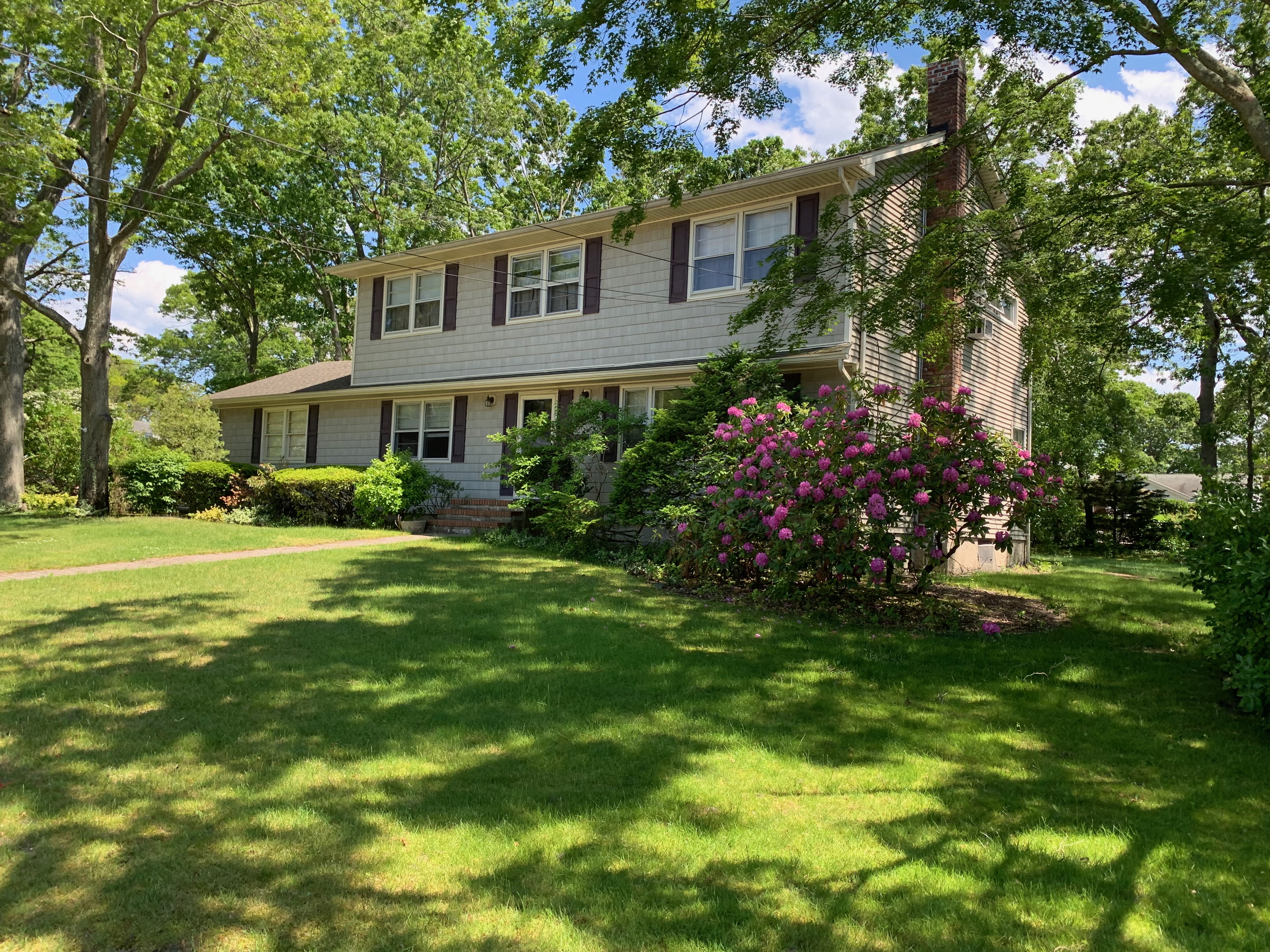
patchogue house
Note: Not a FLIP
I made these home improvements initially to enjoy my home. In all my years, I never wanted, nor did I make improvements in order to resell my home. I have learned that making the improvements you want and that you need, increases the quality of your life while in the home and does in turn add value to your home because if you enjoy the improvements, so will the next family.
List of Major Improvements
Electrical
Did you know that in 1960 the electrical wiring they used was wrapped in a cloth material? Did you know that after 60 years, under some conditions, the cloth material disintegrates? Or at least weakens and can allow for shorts? I do not know if there is guidance or a recommendation to upgrade your house wiring, but it was definitely time.
Well, okay… a quick google search revealed the following:
Cloth-wrapped wiring in 1960s homes, known as synthetic or rubberized cloth insulation, often becomes brittle, cracks, and disintegrates over time, creating significant fire hazards. While sometimes safe if undisturbed, it is generally recommended to upgrade or replace this wiring due to potential insulation failure, lack of grounding, and insurance difficulties.
Key Considerations for 1960s Cloth Wiring:
Hazards: The insulation can become so brittle that it flakes off, exposing live wires, which leads to electrical arcing and fire risks.
Asbestos: Some, though not all, older cloth wiring used asbestos for fire resistance.
Upgrading: Replacing it with modern NM-B (non-metallic) copper wire is the safest option, although some owners with intact wiring may only need partial upgrades in high-risk areas.
Inspection: Have a licensed electrician inspect the wiring to determine its condition, as some 1960s installations used a “pre-Romex” type that may still be functional if not disturbed.
Insurance: Many insurance companies will not cover homes with older, deteriorated cloth wiring.If the wiring is brittle, cracking, or causing issues with breakers, it should be replaced.
The important takeaway here… during the renovations and home improvements, all the old wiring has been upgraded. Also, in order to support my computers and electronics, old circuits were replaced with new circuits and where necessary, additional circuits were added.
Heat Pump for Heating, Cooling, and Water Heater
When I moved in, the house had no air conditioning (well, through the window units that needed to be installed every spring and removed every fall)
The house was heated with fuel oil and was a forced air system with big ducts installed for the returns and the distribution of heat. Anyone familiar with this type of system knows that the air starts out warm near the furnace but by the time it advances to the far end of the house, the heated air is quite cool and does not heat the home on even moderately cool days.
Additionally, using fossil fuels to heat your home results in pollution, and are quite unhealthy.
Additionally, the fossil fuel profits go to the big oil companies, rogue nation states that
use the profits to
fund and foster human rights violations. This is not about politics, well, unless you
adapt the arguements to our politicians and lobbyists in congress who insure that these
companies receive monetary kickbacks
while inflicting harm and economic damage on the people.
I initially brought in Natural Gas thinking that this would be a significant improvement over home heating oil - and yes, it would be given that you did not have to schedule oil deliveries, pay in cash for possibly 300 gallons of home heating oil per visit!
While I am still connected to the natural gas grid, I do not believe there is much of a reason to
use it - especially when considering the health dangers associated with natural gas.
The only potential advantage of leaving the gas connected is if required, a secondary heating
system could be brought in to augment the all electric, heat pump system.
Home Efficiency
I was initially quite uneducated regarding the topic. I bought a home built in 1960.
Building methods have evolved and become more efficient but not so much in a 66 year old
home that had no home improvements done to it over the course of time.
This is what I thought until I started to learn more about home efficiency improvements. There is too much o this topic to cover here but suffice it to say that up until recently The State of New York and the Federal Government had programs in place to upgrade and improve home heating systems as well as efficiency.
This is what I eventually did to my home. This is not a complete list, but serves to show what can be done as well as the rebates and tax credits that were associated with them.
Home Energy Audit
Sealing the ‘gap’ between the foundation and the sill plate upon which the house sits.
Also sealing any gaps in doors and windows, handling pipes and vents that go through the walls.

insulation-holes
Dense packing the walls with insulation
During my renovation work, I installed new insulation. That alone was an improvement!
But, many houses, mine included were build with exterior walls that used 2x4 construction and this limited the amount of insuation one could install.Dense packing is not ‘blown-in’ insulation… well, it is a little, but it is blown in under pressure, tightly filling in the spaces (around the newly installed insulation) This prevents ‘settling’ of the insulation you typicall see with blown-in insulation.
click here to learn more about dense packing with cellulose insulation

insulation-holes
insulating the attic
I had read that one of the single best things you could do in your home is to add additional insulation to your attic. When I initially went into my attic, it was terrible! Insulation was missing or had been pulled up and not replaced. The first thing I did was to roll out rolls of R30 insulation over the attic floor. There was still much to do because this old house had an attic fan installed (something for another time but I really liked it ha) But, for making the home more efficient, it was not good. Initially I just insulated over and around the attic fan which helped…but was definitely not the final solution.
When I brought in the home efficiency gurus, they removed the attic fan. Next they sealed the attic, added baffling so they could blow in (not sure if it considered dense packed, but at least definitely blown in cellulose)
What was so ‘cool’ (bad hvac pun I suppose) was that they blew in 16 inches of insulation into my attic, on top of the R30 that I had already laid down… that is ALOT of insulation. Finally a deck/platform was built to support the heat pump air handler for the upstairs, and the attic entrance ‘hatch’ was build out with styrofoam and foil insulation to insure a tight, no leak fit between the upstairs and the attic.
The house now has a certificate, a Pearl Certificate that documents all the improvements.
In order to be certified, the house, which had been pressure tested initially, was then pressure tested a final time and the improvement was documented.
There are still areas for improvement
Things like bay windows or french doors which make the home look so nice, work against the upgrades. There are solutions but in order to maintain aesthetics these tend to cost a bit more, are definitely worth it, but need to be budgeted.
Enhancinge the space from 1960’s Center Hall Colonial
Have questions or want to share your own sysadmin story? Leave a comment below!
(I will set up comments eventually ;)