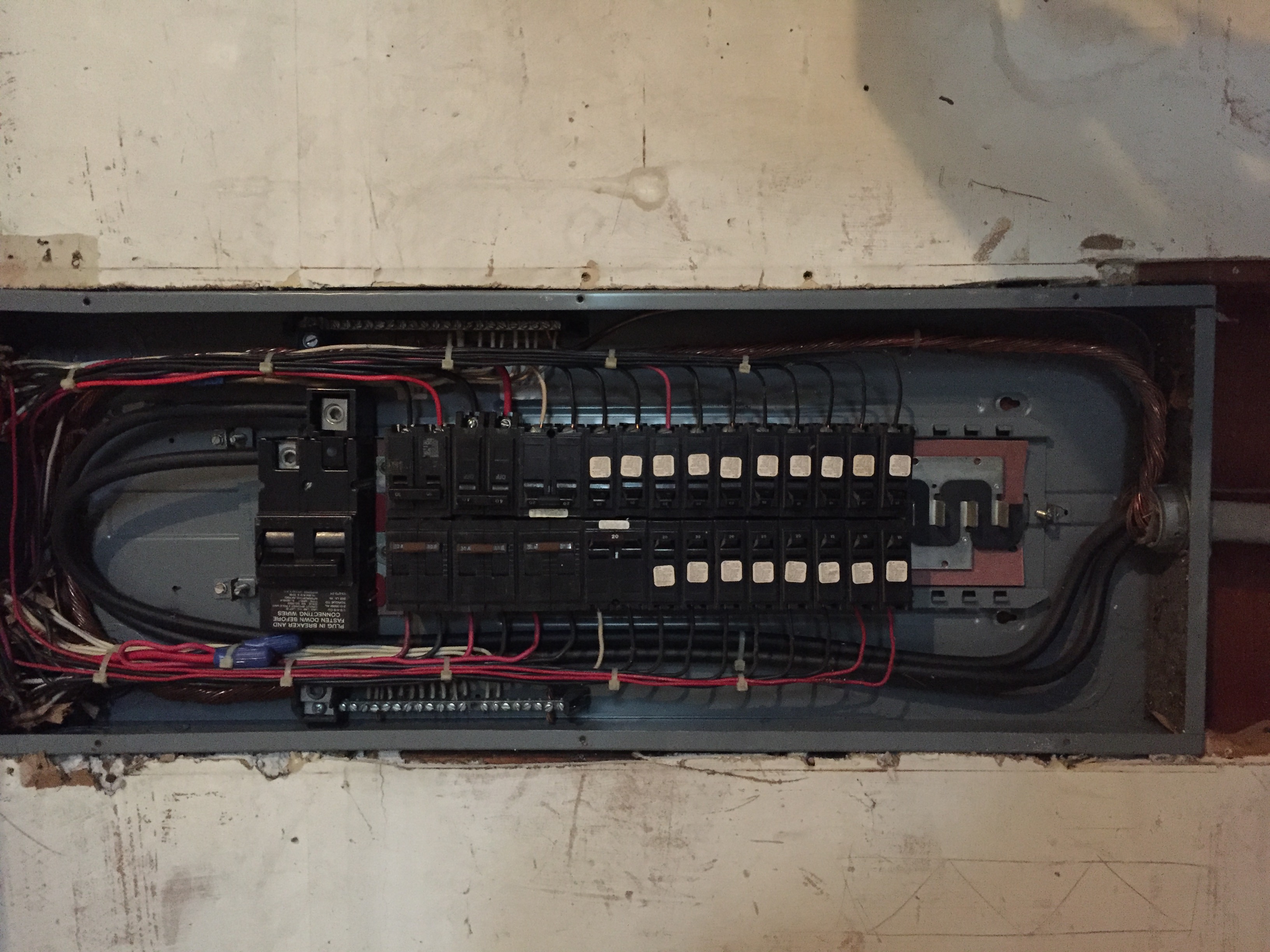
electrical
Background
 My house was built in 1960. Things have changed since 1960. Electrical standards have changed since 1960.
I purchased my home knowing I was going to redo the electrical in the house. There were too many issues that
could not be ignored. Admittedly, I did the work just a wee bit ‘back assword’ because, well, I just bought a house
and didn’t want to spend a bundle renovating it all as soon as I moved in (yes, I should have… but I did not). The two biggest concerns for me were inconsistent ground and fabric wrapped electrical wiring.
My house was built in 1960. Things have changed since 1960. Electrical standards have changed since 1960.
I purchased my home knowing I was going to redo the electrical in the house. There were too many issues that
could not be ignored. Admittedly, I did the work just a wee bit ‘back assword’ because, well, I just bought a house
and didn’t want to spend a bundle renovating it all as soon as I moved in (yes, I should have… but I did not). The two biggest concerns for me were inconsistent ground and fabric wrapped electrical wiring.
Cloth-wrapped wiring in 1960s homes, known as synthetic or rubberized cloth insulation, often becomes brittle, cracks, and disintegrates over time, creating significant fire hazards. While sometimes safe if undisturbed, it is generally recommended to upgrade or replace this wiring due to potential insulation failure, lack of grounding, and insurance difficulties.
Key Considerations for 1960s Cloth Wiring:
Hazards: The insulation can become so brittle that it flakes off, exposing live wires,
which leads to electrical arcing and fire risks.
Asbestos: Some, though not all, older cloth wiring used asbestos for fire resistance.
Upgrading: Replacing it with modern NM-B (non-metallic) copper wire is the safest option,
although some owners with intact wiring may only need partial upgrades in high-risk areas.
Inspection: Have a licensed electrician inspect the wiring to determine its condition, as
some 1960s installations used a “pre-Romex” type that may still be functional if not disturbed.
Insurance: Many insurance companies will not cover homes with older, deteriorated cloth wiring.
If the wiring is brittle, cracking, or causing issues with breakers, it should be replaced.
Just from my inspection and the visible inspection I performed, the list of work to be included:
replacing all the old metal outlet boxes with ground tied to them with new boxes and insuring that ground was complete to each one.
arc’ed marks on or above the outlets themselves… shorts and arc’ing
a foyer light that would eerily flicker when you turned it on
the upstairs hallway light and downstair foyer lights did not work as expected. You could not control both of the lights from the upstairs and downstairs switches.
there were too few circuits in the house and they were overloaded. Plug in something like a heater, turn it on and poof… it would throw the circuit breaker.
the garage did not really have installed outlets (there was an outlet to control the outside lights and a sprinkler timer but it was shared with other parts of the house.
at some point in time the previous owner had renovated the kitchen. Rather than redo and rerun the electrical wiring, junction boxes were installed. From the kitchen it would appear that new wiring was in place, but back to the service panel, it was just the same old wiring.
Work Performed
Have questions or want to share your own sysadmin story? Leave a comment below!
(I will set up comments eventually ;)